
The Dog That Needed a Stronger Leg - How Continuous Fiber Composites Solve the Durability Problem in Custom Prosthetics
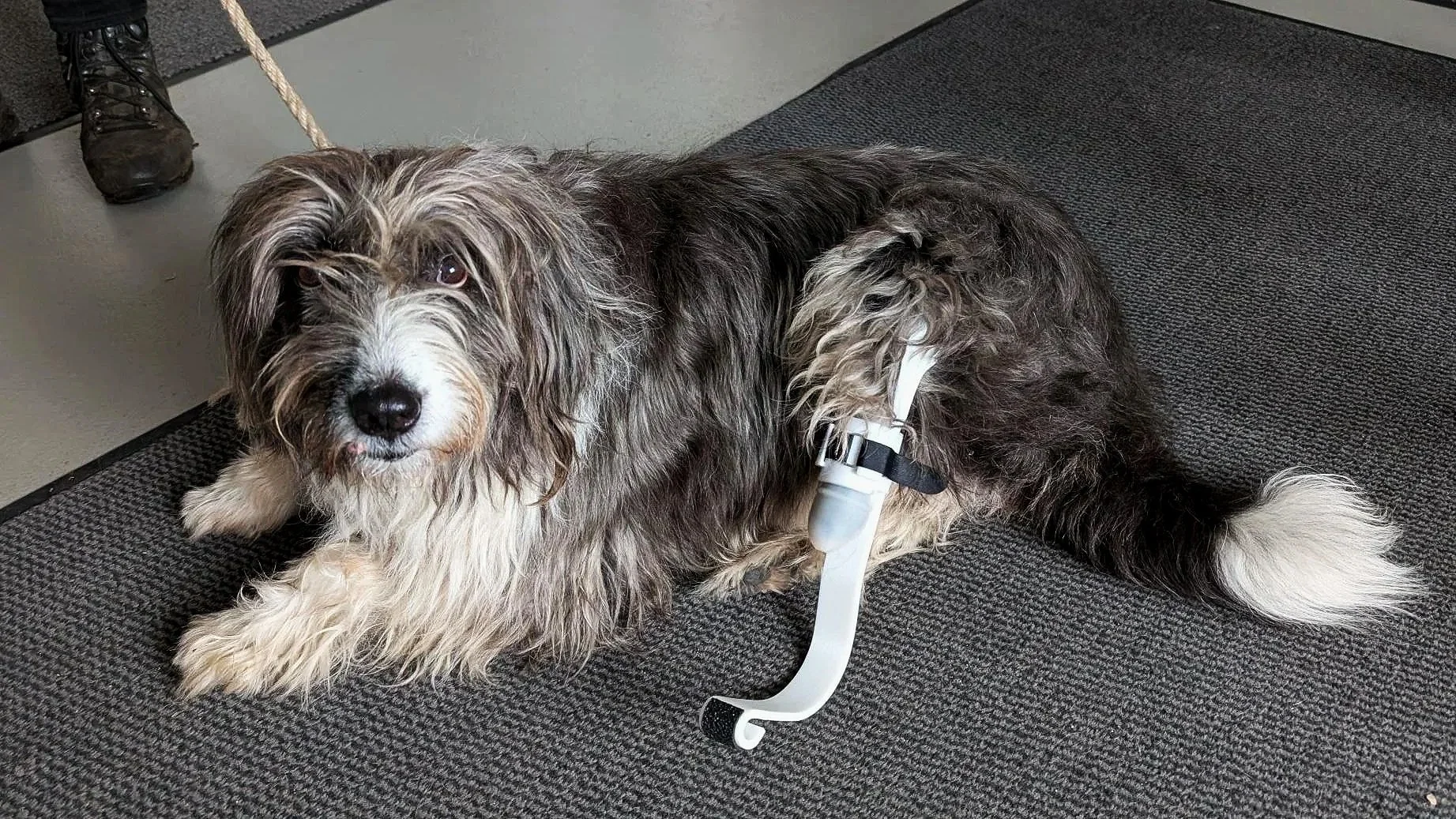
When a dog lost its leg, a Berlin-based orthopedic team faced a problem that is far more common than most people realize: how do you produce a custom prosthetic that is strong enough to last, fast enough to be practical, and affordable enough to justify the effort?
The answer came from an unexpected place — continuous fiber composite manufacturing.
The Problem With Plastic Prosthetics
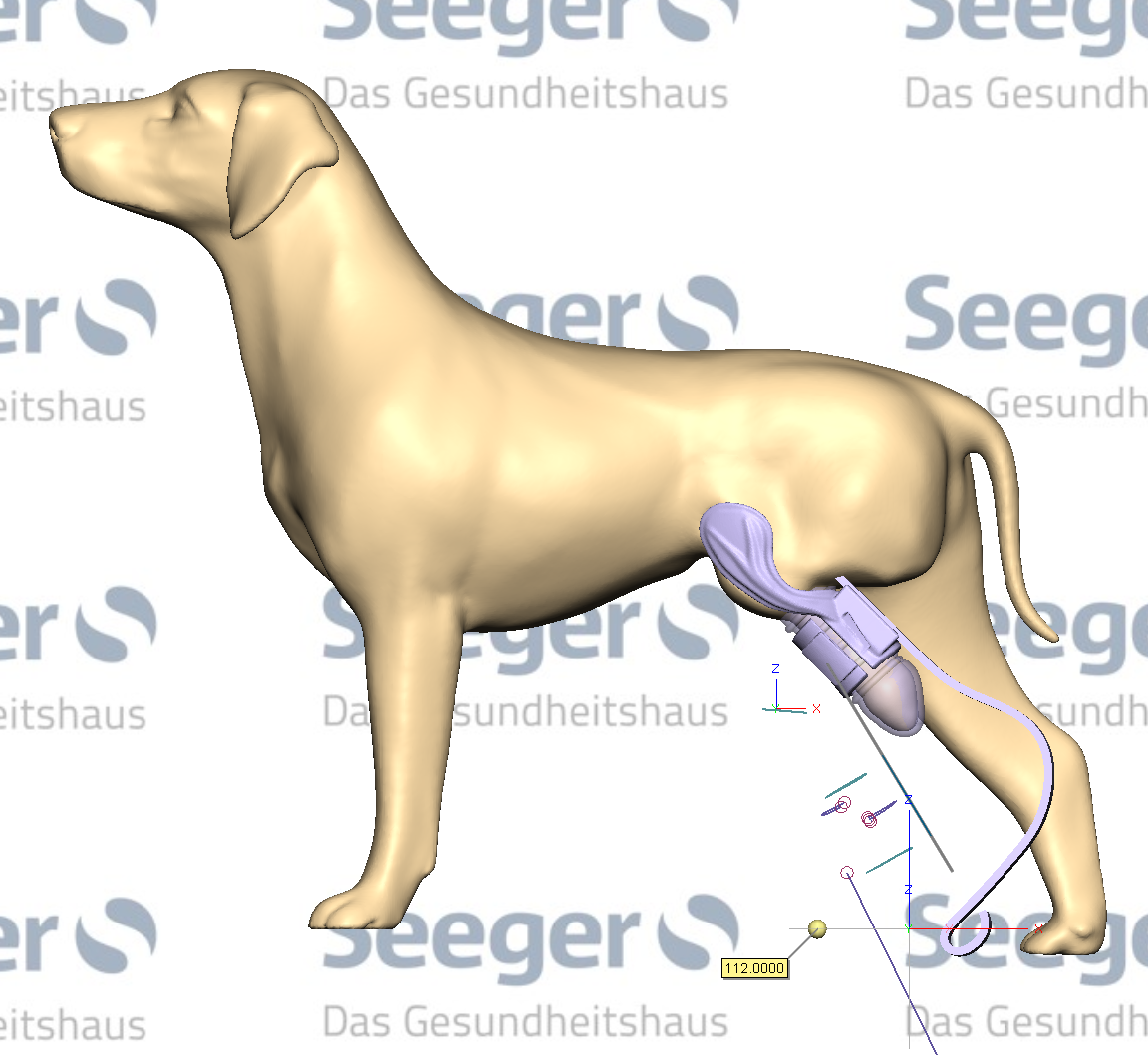
Seeger Gesundheitshaus, one of Berlin's leading orthopedic and medical supply specialists, had a patient who was not a human. A dog had lost a leg, and the team wanted to help. The approach seemed straightforward: 3D print a custom prosthetic shaft to fit the animal's anatomy, attach a prosthetic foot, and give the dog its mobility back.
Standard 3D printed plastics, even high-quality engineering polymers, have a fundamental weakness: they fatigue. Under repeated load — and a dog's full body weight qualifies — the material bends, micro-cracks form, and within around 60 days the part either deforms permanently or breaks. For a dog putting full weight on a prosthetic leg with every step, that is not just inconvenient. It is a safety risk.
The alternative? Traditional hand-laminated carbon fiber. It would have delivered the strength and durability required. But it would also have required hours of skilled manual labor, expensive tooling, and a process that simply cannot be justified economically for a one-off custom part. That is the fundamental tension in orthopedic manufacturing today: you either accept the limitations of 3D printing, or you pay the price of traditional composite manufacturing.
What Actually Causes Plastic to Fail
The failure of unreinforced plastic prosthetics is not just about stiffness. It is about fatigue resistance. Every time a load is applied — every step the dog takes — the plastic experiences microscopic stress at the molecular level. Over time, those stresses accumulate. The material does not suddenly snap. It progressively weakens until one load cycle too many causes it to fail.
Continuous carbon fibers work differently. When fiber is placed along the load path of a part — oriented specifically to carry the forces the part will experience in use — those fibers do not fatigue in the same way. They distribute stress across thousands of individual filaments. The result is a part that does not just start stronger. It stays strong.
The Endless Industries Approach
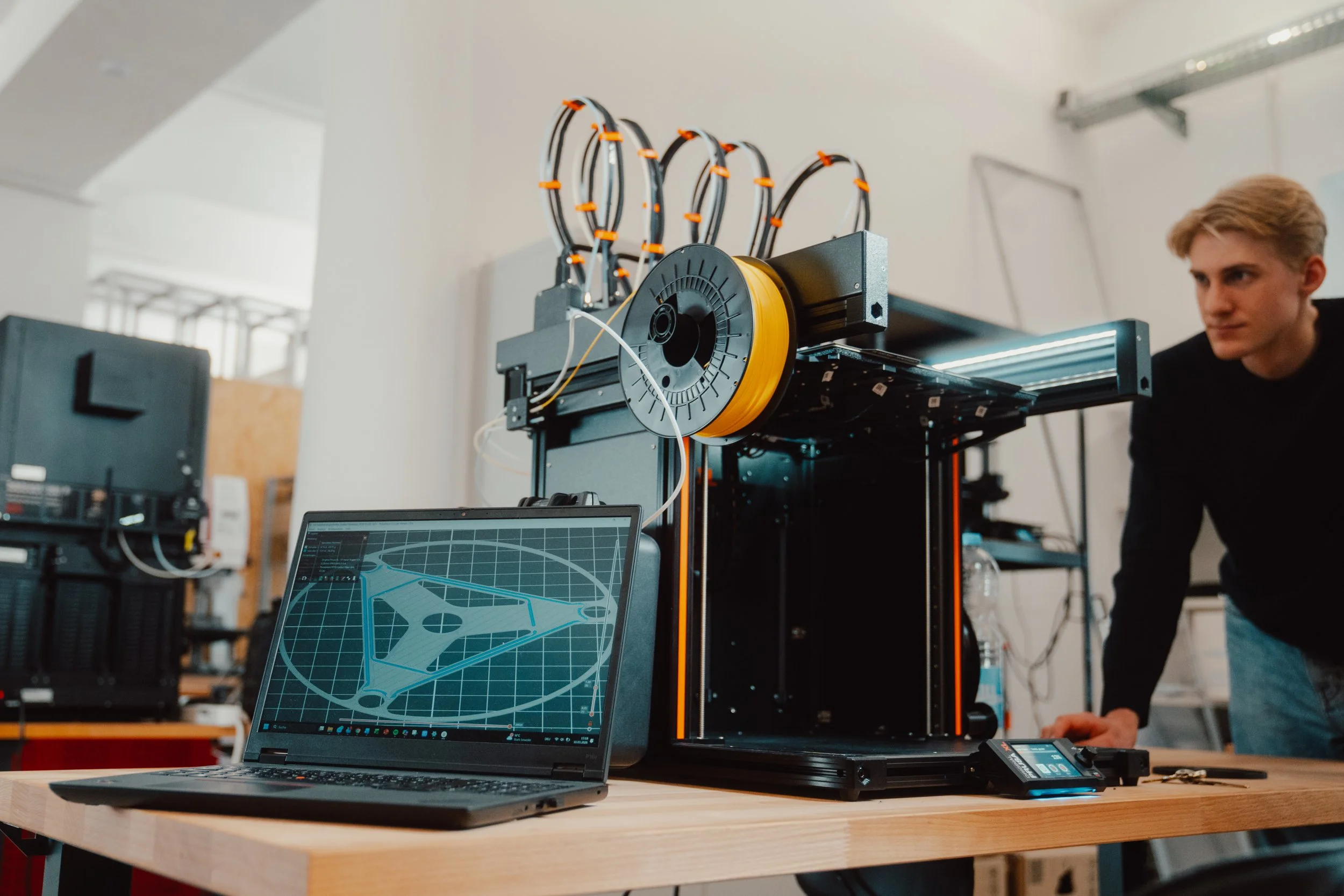
The Seeger team reached out to Endless Industries with a simple question: could continuous fiber manufacturing help?
The approach was straightforward. The existing 3D geometry of the prosthetic shaft was imported into Akio, Endless Industries' fiber layout and toolpathing software. Akio automatically identified the load-bearing paths within the geometry and generated a continuous fiber reinforcement layout. The fibers were placed precisely where the structural demand was highest, integrated directly into the part during manufacturing rather than added afterward.
The first prototype came back stiffer than expected — in fact, slightly too stiff for a dog's natural gait. That is a good problem to have. It confirmed the fiber reinforcement was working. A second iteration adjusted the fiber layout to tune the stiffness, producing a part that was strong, durable, and appropriate for the patient.
Why This Matters Beyond One Dog
This case is small in scale. But it demonstrates something important about the future of orthopedic manufacturing.
Custom prosthetics and orthotics are, by definition, individual. Every patient has a unique anatomy, a unique load profile, and a unique set of clinical requirements. Traditional manufacturing processes — whether hand lamination or prepreg — are economically viable only when the same part is made repeatedly. The moment you need a one-off, the economics break.
3D printing solved the geometry problem. It made individualized parts manufacturable. But it introduced a materials problem: printed plastics are simply not strong or durable enough for load-bearing applications.
Continuous fiber manufacturing closes that gap. The same flexibility that makes 3D printing ideal for custom orthopedics — geometry is defined in software, not in tooling — is preserved. But the structural performance of the part moves from engineering polymer territory into composite territory.
The dog is walking again. The owner is happy. And the Seeger team has a process that could, in principle, be applied to any custom prosthetic or orthotic device — human or otherwise.
What Comes Next
This use case was a prototype. Endless Industries and Seeger Gesundheitshaus are exploring how continuous fiber manufacturing can be applied more broadly to orthopedic components, from ankle foot orthoses to prosthetic shafts, where individualization and durability need to coexist.
If you work in orthopedics and face the same tension between customization and structural performance, we would like to hear from you.